Skip to main content Skip to footer


The modern fashion world is all about speed in innovating and adapting to succeed. Months of waiting to get a prototype is a liability that a small brand just cannot afford to bear. Now it only takes you 14 days to bridge the gap between the designer’s vision and a physical custom fabric. The lab dip is mandatory, and it is the initial stage in the process of developing and creating the ideal color for a garment.
Lab dips play a vital role in the match color of the fabric process in the fashion world and serve as a guide for the ultimate color comparison that will be printed on the entire production batch. With the latest high-tech digital processes, you can radically reduce inventory risk and, at the same time, make your designs enter the market with the greatest impact. The ability to produce your own custom colors is no longer an art of industry giants; it is a necessity of quality and production excellence.
What Is Digital Color Matching (D/M) in the Textile Industry?
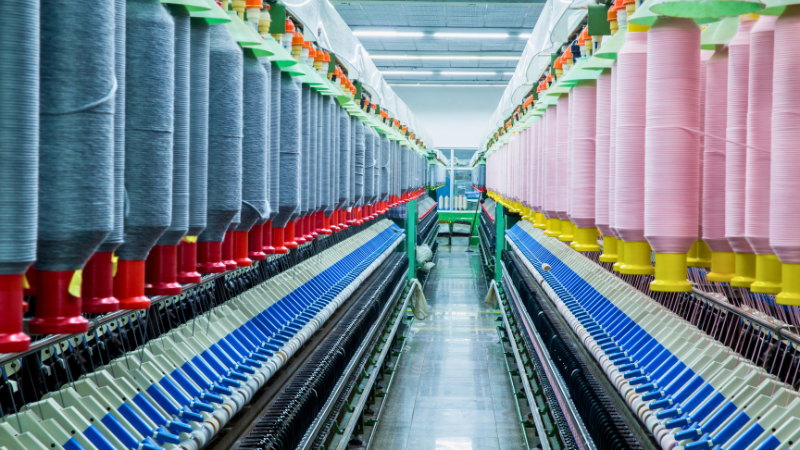
Digital color matching is a process based on data, which employs the use of spectrophotometers and specialized software to define color as a numerical value. D/M does not necessarily use a human eye and a piece of fabric swatch to relay shade requirements since spectral data, often in the form of QTX files, are used instead. For instance, your designer in New York can transmit a digital fingerprint of your color accuracy standard to a factory in Vietnam immediately using this technology. It starts with a highly accurate photospectrometer to read the color and propose the first formula of dye.
The main instruments that will be used are high-precision spectrophotometers, a light box with standard settings, and color management software such as Datacolor or X-Rite. The principle of perfect color matching is based on the fact that the reflection of light over the visible spectrum provides a unique color curve. It is a scaled instrument applied at all stages of your development to decrease subjectivity and remove human errors in color perception due to age or tiredness. Brands are turning to digital lab dip solutions to objectively measure the color data and avoid the necessity of shipping hard copy samples.
What are Physical Lab Dips and Why Are They Still in Use?

The first stage of developing and approving the color of a product is the lab dip process. A lab dip is a small piece of fabric, usually of about 10 grams, that is dyed at a laboratory facility to fit the color standard of you. Lab dips are used to preview the final color, which will be used on the complete production run. It takes the technician to make several beakers or dye recipes to determine which one is closest to the shade you want. Such physical samples are forwarded to your brand to make visual approvals of colors under a light box before the final process begins.
Although the use of digital tools is increasing, the significance of the physical lab dips is not diminished due to the possibility of a hands-on assessment of the reaction of the dye formula with your fabric texture and luster. The significance of lab dips in fashion manufacturing is that they allow one to exercise control over the look of the final product. Approved lab dip samples are a kind of physical golden sample that may be checked and compared with bulk fabric types on the factory floor. The shipping process, however, incurs weeks of development calendars and introduces constraints in terms of subjectivity of visual evaluation and high courier charges.
The Recurring Character of Color Development
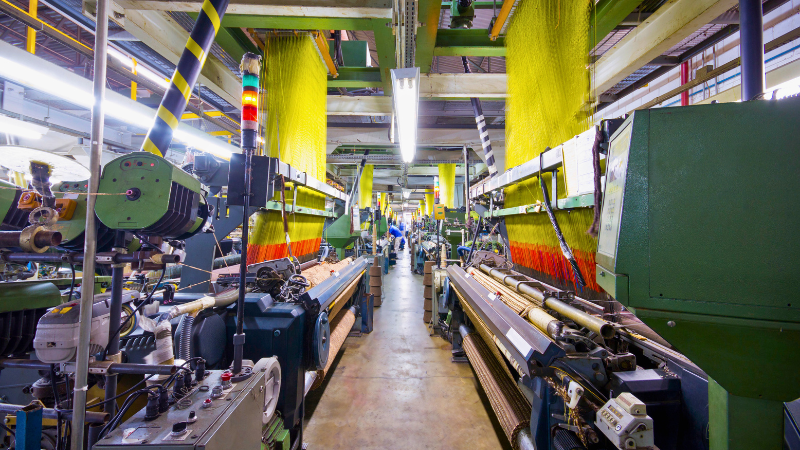
The lab dip procedure takes several cycles before the final sample is passed to bulk production. The dye house will hardly ever get a perfect match of the first A, B, C options offered. Every set of re-dips is an improvement of the dye formula. In case the initial set is overly yellow, too dark, or has a slight purple hue in comparison to the color standard, the designer will give a response, and the lab will have to begin the dyeing process again as the first step.
This is the repetitive process wherein numerous bottlenecks exist in the manufacturing industry timelines of garments. Every time the factory has to repeat the PFD process, re-calibrate the dye formula, and allow the fabric to dry before it can be sent to be compared with the color. The ability to handle these iterations with good communication and digital pre-screening is the difference between high-performance brands and those that cannot handle late deliveries.
Why Color Consistency Is So Difficult in International Supply Chains
Color continuity between different countries is challenging since there are no two dye houses that have the same equipment and water source.Different materials absorb and reflect light differently and this might result in the same Pantone code being viewed differently in different fabrics. The mineral content of water used in a factory in India is very different as compared to that of a mill in China. The chemical reaction of the dyeing process to your fiber can be changed by regional processes and humidity levels. The PFD process is carried out by washing the fabric using a light detergent and bleach to eliminate sizing before starting the dyeing process.
Another challenge is lighting conditions, where colors that look just fine in your office in California would turn yellow or purple in the retail fluorescents. This phenomenon is known as metamerism, and it is one of the most prickly aspects where you are forced to contend with different lighting conditions and materials. The reason that being approved does not necessarily imply being repeatable is that the lab environment does not have the variables of heat and pressure that you have in your large production runs. Regular analysis of lab dips can save the money that is lost by refusing to take in large quantities of wrongly dyed material in mass production.
The Advantages and Disadvantages of Digital Color Matching (D/M)
Digitization of the working cycle is a revolutionary method of addressing the old obstacles in the clothing production sector. Although the technology will remove the subjectivity of humans, it will also present certain technical demands. It is essential to consider the broad strategic benefits and the practical limitations of every brand thinking of such a digital jump. Lab dips prevent expensive errors in the production of colors since they are tested before large-scale production.
Advantages of Digital Color Matching

- Unparalleled approval rate: Your spectral data is carried immediately through the internet and you can get instant feedback and color approvals.
- Objectivity of decision-making: Numerical spectral data does away with the subjectivity of your human perception of color. The accuracy of mathematics will give you consistency in the various lights and observers.
- Cross-supplier consistency: This ensures that your print work, fabric and accessories are a perfect fit.
- Sustainability and efficiency: Physical sampling will decrease the environmental impact of your brand. The conventional dyeing methods may have significant environmental implications, which require sustainable lab dips.
- Accountability and transparency: Digital systems have the ability to leave an eternal track of your history. Comprehensive reports enable accountability supported by data with each of your dye houses.
Cons of Digital Color Matching

- Stringent calibration requirements: To be successful, you must align all your spectrophotometers in your chain.
- Increased start-up expenses: The installation will demand a substantial capital investment in hardware and software licensing of a small brand.
- Staff training needs: Your staff needs to change their attitude and believe mathematical information rather than their visual intuition.
- Limitations in texture: It is sometimes difficult to get the exact color that designers want because of the differences in the composition of fabrics and the rate of uptake of dyes. The digital tools are sometimes unable to cope with uneven fabrics such as high-pile fleeces.
Advantages and Disadvantages of Physical Lab Dips

Physical lab dips are still a pillar in the fashion industry even with the advent of sophisticated digital versions. They also give your stakeholders a physical point of reference on which they can confirm shades in the natural lighting environment. Lab dips are compared to the original color standard using certain light sources, usually by spectrophotometer.
Pros of Physical Lab Dips
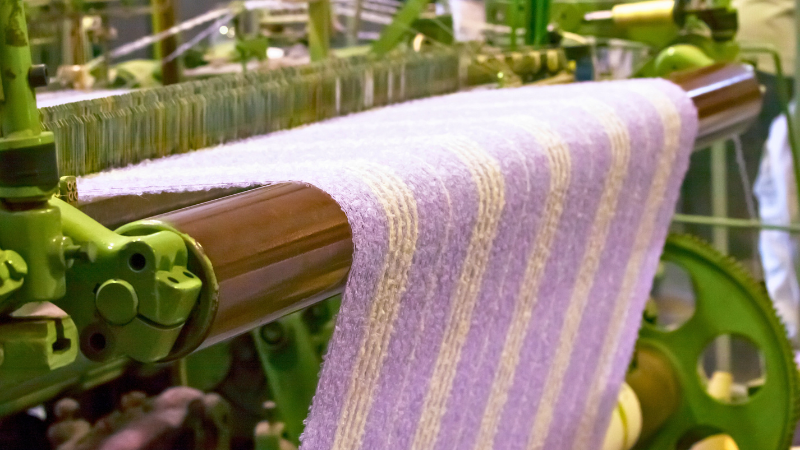
- Tactile testing: It is possible to test physical samples that will help your designer observe the dye behavior on your real fabric luster and feel it with their hands.
- Universal standard: A language of universal standard, which is familiar in all your dye houses. Pantone color standards can be applied to ease communication of colors over the global supply chain.
- Specialty clarity: Your tangible samples are better in the assessment of strike-offs in screen printing or complicated print designs on various fabrics.
- On-site reference: Golden samples will give your quality control teams a certain reference point that they will use in final inspections.
Cons of Physical Lab Dips
- Bottlenecks in shipping: The garment manufacturing industry is dynamic, yet it does not work that way with its color-approval process. Physical fabric swatches represent a significant bottleneck between the six-hour lab dip and the number of days in customs. To be competitive, you have to do away with this logistical dead time.
- Subjective assessment: Light, age, and fatigue have an impact on the perception of colors. Different lighting conditions tend to make colors appear different, and this makes the color-matching process complicated.
- Low bulk correlation: There is no way you can perfectly model the heat and pressure of large industrial dye vats with your lab beakers. Due to the need for an even dyeing process of up to six hours for the actual fabric to turn color, the process requires heat and movement.
- Scalability issues: The physical standards are administrative and can be easily erroneous. Your samples become darker and change with time, becoming inaccurate in their color as your permanent record.
Why Approved Lab Dips Continue to Fail in Bulk Production

The most widespread cause of failure is the batch-to-batch dye variation that will happen during your large production runs. A dye vat may change your final fabric even with an ideal dye formula but a slight adjustment in the temperature of the dye vat. When changing from lab dip to bulk production, the color can change slightly and small differences are bound to occur. The difficulty of scaling up between the laboratory beaker and the industrial vat is a significant source of pain to your production managers.
Inconsistency of the lighting conditions and metamerism often result in the failure of your approved lab dip on arrival. Colours may appear different when there are different lighting conditions, and therefore it is important to ensure that lab dips are checked in different lighting conditions. Moreover, your physical samples are light-sensitive and humidity-sensitive, and this causes shade drift when your home textile manufacturers are referring to old and faded samples. Using a worn-out physical specimen is a sure method of making sure that your bulk fabric does not match the original purpose.
Can Digital Color Matching Reduce Sampling Time and Costs?

Digital color matching may also reduce the number of your color approval cycles by 50%. D/M gives you your immediate rejections in case one of the shades is beyond the permitted Delta E tolerance so that you do not squander your time on shipping. The lab dip procedure can take a number of repetitions before the end product can be accepted to be produced.
Besides speed, digital tools allow greater coordination of your different elements, like zippers and fabric, to one color standard. Lab dips make sure that all the fabrics, trims, and components are in balance with color, which is paramount to brand reputation. This makes sure your blue plastic button fits your blue cotton or polyester cloth exactly and saves on the number of times your creative team has to go through. Fewer iterations imply that your creative team will have more time to focus on the vision of the designer and less time on logistics.
Are Digital Color Matching and Multinational Countries Reliable?
The accuracy of D/M is absolutely based on your calibration and common standards of the world network. To be able to control your consistency across dye houses, you need to use digital master colors, which are stored in a centralized database on the cloud. A larger color standard, e.g., a 3×3 inch (7.62 centimeters) swatch, may be mailed to the factories to help them more closely match colors. Your brand assures your human eye that there is no difference between batches manufactured in different regions by the strict Delta E tolerance.
Daily standardization of your spectrophotometers with standardized calibration tiles should be done to confirm that the spectrophotometers are functioning correctly. The light absorbs and reflects differently on different materials, and thus the same Pantone code appears to have significant changes between fabrics. Any mistake in calibration at your distant factory could result in a whole shipment of defective bulk cloth reaching your distribution center. Digital information is much more trustworthy when handled properly when compared to your physical counterpart, who is going through different weather conditions.
Should Brands use Digital Color Matching or Lab Dips?
Digital color matching is the best option when you are dealing with your core colors and high-volume production where uniformity on smooth cloth cannot be compromised. When you are making the same black or white every season, then you can only avoid drift in shade by using digital data.
Your early practice with fancy material, which demands visual comparison of color, as in the case of irregular textures such as metallic brocade, is still done by physical lab dips. Lab dips are necessary to guarantee the uniformity of colors in various materials and parts of a garment. Risk-based decision-making would imply that you use physical samples in your new dye houses until you could test their digital abilities to prove the importance of rigorous auditing.
Should Brands Use a Hybrid Approach?
A hybrid method consists of taking your digital data and reducing the possibilities to either one or two samples and then you send a physical match. This will make sure that your factory has the right formula of the dye and spectral fit before they waste their time on your sample run. Before shipping, it is possible to take side-by-side photos of the color standard and lab dip to determine the accuracy of colors. Cutting down on your iterations with a digital pre-screening helps you to retain your confidence and saves you time you would have spent with couriers and physical re-dips while double-checking.
The hybrid model is also a safety net for your teams who are not ready to put all their trust in data yet through having your tactile check-up. It is possible to use a chart to arrange comments on lab dips, which simplifies the process of following approvals and feedback. This would be an effective workflow when your digital “OK” is needed before any of your physical samples are ever dyed and shipped. Eventually, most of your solid clothing programs can be phased out using this physical fabric swatch.
Common Color Matching Mistakes Brands Make
You can easily get into traps that will undermine your quality in the course of development even with the best intentions. Such costly mistakes are normally a result of you depending on old manual processes. The process of lab dip starts with the choice of dyes and pigments with the consideration of colorfastness and compatibility with fabric. A strong, data-driven strategy can only be executed through effective communication. Use of percentages in comments about color adjustments should be avoided since it can be misunderstood by the factories.
- Subjective visual dependence: The acceptance of your color by just relying on human eyes will cause false approvals because of varying lighting conditions. Depending on the lighting conditions, colors may appear different and that is why lab dip swatches are examined in a lightbox with alternative lighting sources to effectively see the big picture.
- Poor technical specifications: You should not be in the business of guessing at what to expect of your brand, as you have not provided spectral pass/fail metrics in your tech packs. It is not documented and that is why you cannot call vendors to task when shade drift takes place in your various countries.
How Brands Can Prevent Color Disputes With Suppliers

International factory disputes can be solved by establishing digital standards and owning your master QTX files, which gives you the mathematical basis to solve the dispute. As soon as your spectral data is centrally stored in a PLM system, you will have the objective data that you need to hold your dye houses responsible. The application of these strict standards takes the emotion out of your negotiations and keeps the stakeholders on verifiable metrics before you grow with a partner such as Yanmao Textiles.
Establishing Digital Master Standards
You should have absolute mastery of your master QTX files so that all your textile manufacturers know which spectral curve to work to. As an example, when you have a particular color, say Forest Green, and you source it out of three dye houses, you give them the same digital file so that your color is not going to shift every time you have a production batch.
This is referred to as metamerism, which is the resemblance of specific colors in one light source and dissimilarity in another, which can be achieved through the application of lab dips. This centralized ownership does away with the danger of having your suppliers apply their interpretations or old physical samples as their standard point of reference.
Adopting Contractual Pass/Fail Metrics

To give you legal ground to refuse off-shade bulk fabric deliveries, your contracts must specify tolerable Delta E (CMC 2:1) levels. An effective illustration is to have an absolute target of DE 0.8 of your seasonal debut, which will enable you to mathematically demonstrate that your delivery is out of spec. These objective standards protect your investment as they eliminate your burden of proof of subjective opinion and transfer it to objective spectral evidence.
It is also important that you indicate the standardized lighting conditions, i.e., D65 or TL84, in which all of your shade assessments should be done. In one example, a contract involving the delivery of a pass to you under your retail store light guarantees that your product is working properly. Samples of lab dip are examined in a light box under various sources of light. You can minimize the risks of the long-term conflict related to visual color perception by specifying these environment variables as in your purchase order.
How Color Is Controlled During Bulk Production

One of the most effective means of avoiding expensive errors is to set up a strict control policy when you are in the mass production stage. This is a proactive measure that will enable your teams to track uniformity in real-time and implement required changes before your final fabric is delivered to the world market.
With homogenization of such checkpoints, you can be sure that all rolls of your materials are identical to your standardized lab dip. Lab dips are used while anticipating the end color to be used on the entire production batch.
Inline Checks and Digital Shade Mapping
The amount of control you have over the color of your fabric in the bulk production process is dependent on stringent inline monitoring, where your mills scan each individual roll of your cloth to create a digital shade map. The result of this digital monitoring is a data-driven visualization of all your shipments, which can be seen by your technicians allowing them to detect rolls that are not within your approved lab dip.
It is by preventing these deviations at the first stage that you can save yourself the logistical nightmare of having a container of mixed-shade materials. Lab dips make sure that fabric, trims and components are all compatible.
Tracking Long-Term Shade Drift
Your 10,000-yard orders have to be monitored in shade drift because the production runs would be spread over a number of weeks. The changes in spectrals between your first and last batch should be monitored by your technicians to guarantee that the signature of your collection is physically the same.
It is much quicker to control your corrective dyeing choices when you can take control of your chemical recipe in real-time by using software. The color of the lab dip is read with a photospectrometer, which proposes the initial formula of the dye. The avoidance of progressive color shift is often associated with a long production cycle.
On-Site Verification and Brand Reputation

Handheld spectrophotometers are used by your quality control teams in the garment factory to check bulk fabric on your cutting table before a single cut is made with a knife. This last on-site checkup eliminates the situation that your factory has made thousands of clothing only to find they look purple in store lighting conditions. Your ghost data is a crucial insurance policy that secures the aesthetic reputation of your brand and guarantees your customer loyalty.
The Future of Color Matching in the Textile Industry
The clothing manufacturing business is about to experience a revolution in technology. A number of new trends are leading to your completely digitized future, where you are no longer bound to your physical limits in determining your production schedules. Under various lighting conditions, shades may appear in various forms and this makes the process of color matching more complex. Some of the bonus tips that should be kept in mind during different lighting conditions are as follows:
- Digital twin integration: Digital twins will be integrated into the workflow of the PLM, and high-fidelity virtual models will be produced, which guarantee the accuracy of color consistency of all physical materials.
- AI predictive dyeing: AI will enable the forecasting of your dye formula with almost perfect precision by your dye houses by analyzing your local water soon. This will save you millions of gallons of water per year by doing away with lab dips.
- On-demand localized printing: Digital print development will ultimately blur the boundary between fabric manufacturing and color application. Your local printing eliminates the need to ship internationally, which requires carbon-intensive delivery, which gives you an enormous competitive edge towards your lean brand.
Final Thoughts
Getting color correct in all your supply chains worldwide is a science that requires more focus on how your lab dip is standardized than on the tools that you use. With your brand heading towards digital color matching, you can secure your cash flow, shorten lead times and avoid the aggravation of off-shade deliveries. The only solution is to set up your mathematical single source of truth so that your aesthetic in your brand cannot be subject to human error.

To make the correct decision, you need to know well the capacity of your textile manufacturers and your technical needs in each of your garment lines. Collaborating with an organization that has advanced digitally, such as Yanmao Textiles, means that your brand will get to enjoy the best of spectral accuracy in each node of the international market. Give Yanmao Textiles a call today to learn how our combined digital color processes will ensure that your designer dream is realized and that your production can be scaled to any size with the confidence that everything will be alright.