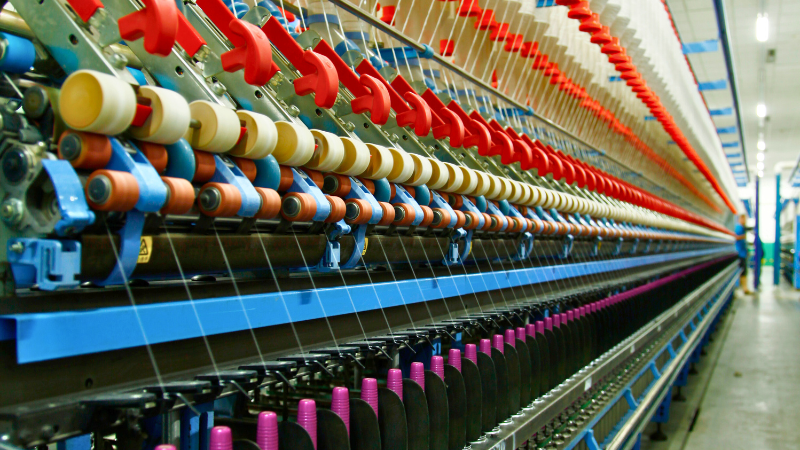
The process of selecting a fabric supplier is, perhaps, the most important choice in textile sourcing. The type of fabric mill that you choose will define the final quality of your product, the regularity of your manufacturing schedule, and whether your brand is meeting the international sustainability requirements. Any error in this case may result in expensive delays, defects, and permanent damage to the brand image. The initial step to attaining a competitive advantage is to find the right fabric supplier.
This guide provides a conclusive supplier audit checklist applied by the international garment manufacturing industries and fashion houses to acquire the best fabric. It will explore every mandate required to determine whether a textile mill is reliable, certified and has the capacity to deal with your quality requirements.
Why Evaluating a Fabric Supplier Matters
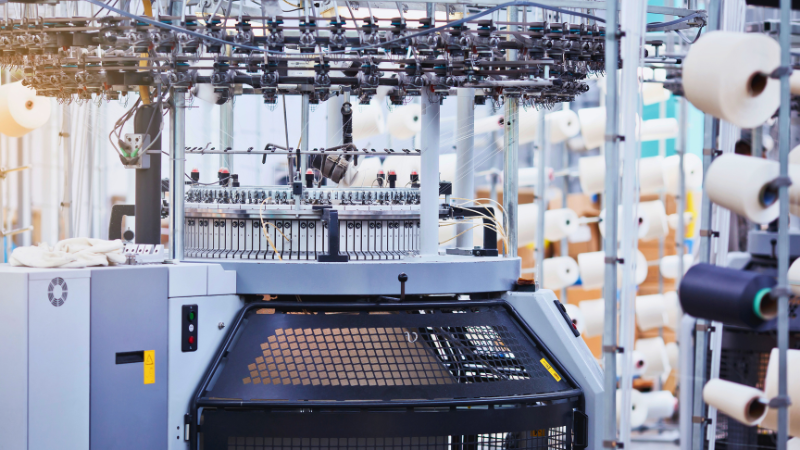
Garment fabric analysis is necessary since the interaction is much more than mere transaction pricing. Your supplier is your ally in quality assurance, regulatory compliance and long term relation maintenance in your supply chain. The following are some of the dangers of selecting the wrong supplier:
- Poor consistency: Poor fabric quality results in material wastage and high returns. You should ensure that there is aesthetic consistency in your clothing line.
- Delays in production: Unrealistic lead times or ineffective capacity planning causes a stop in your whole production schedule. Clothing brands that cannot afford on-time delivery.
- Compliance failure: Failure to use adequate verifying certifications (such as OEKO-TEX or GRS) prevents your clothes to enter prime international markets (EU, USA).
- Hidden expenses: Unforeseen expenses of testing data, sampling or quality inspection eat up your profit margins, making the cost of sourcing a fabric wholesaler a lot more expensive.
Step 1: Assess the Supplier’s Company Background & Expertise
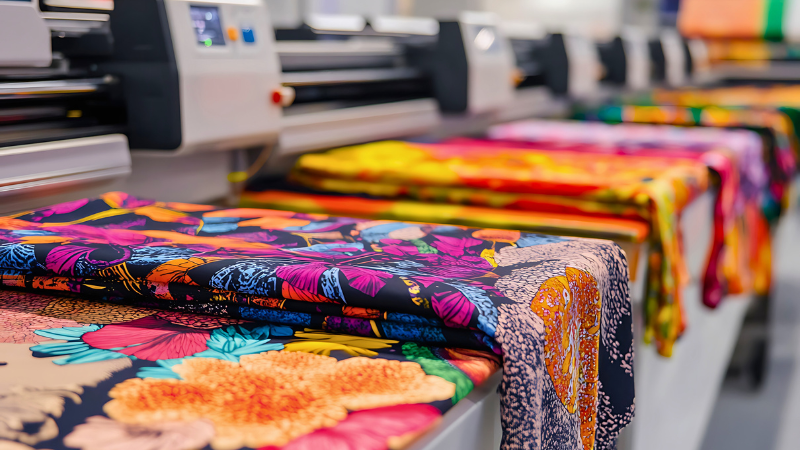
You have to gauge the groundwork and capability of the supplier to deliver, before getting into any technical specifications. This is the first step when dealing with potential suppliers evaluation for your fabric store.
Supplier Expertise Checklist
| Criteria | Why It Matters | What to Ask |
|---|---|---|
| Manufacturing Experience (Years) | Projects stability, historical knowledge and technical problem solving skill. | "How many years have you been a specialist in woven fabrics?" |
| Specialization | Shows focus. A textile mill that produces knits might not be able to produce high quality fabrics in woven technical textiles. | "What is your expertise in regard to particular fiber content or fabric construction?" |
| Export Markets & Clientele | Measures adherence to international standards of quality (EU/US). | "Can you give references to big clothing brand/distributors?" |
| Vertical Integration | Mills with control over the production of yarns, weaving, and dyeing have a higher quality control and reduced lead times. | "Do you do in house dyeing and finishing?" |
| In-House R&D and Sampling | Displays the capability of creating own fabric and transition fast to new specifications. | "What is your standard lead time of a sample yardage?" |
Long-established, vertically integrated mills such as YM Textile, lowers buyer risk since they have control over the entire value chain, which is the raw material to the final fabric hangs. Good fabric suppliers require open expertise to be able to help them when sourcing fabric supplier relationships.
Step 2: Review Fabric Quality Standards and Internal QC Systems
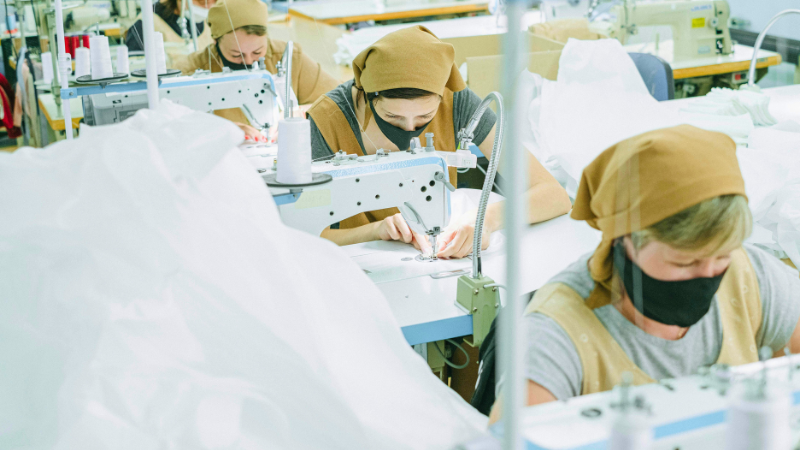
An effective wholesale fabric supplier will have strict internal QC systems which ensures consistency. You should analyze their procedures at three different stages before, during and after bulk fabric production.
Incoming Raw Materials Control: The Foundation of Quality
The quality of fabrics begins with the input. Before the raw materials are utilized in product
- Quality checks of Yarn/Fiber: Does the mill test the incoming yarns in terms of count, uniformity in the twist and strength? Poor quality of the yarn ensures imperfection in the final cloth. This test is very important, particularly when handling synthetic fabrics or mixed organic fabrics and want to find the best.
- Supplier traceability: In the case of sustainable fabrics, the mill has to be able to trace the raw materials to the origin (fiber producer or recycler) to confirm GRS or organic cotton claims.
On-Loom and In-Process Inspection: Monitoring Fabric Construction
This confirms that the fabric manufacturing process is functioning properly and reduces large scale defects that can be caused by machine malfunction or operator sloppiness.
- Ongoing inspection processes: The operators of the mills need to continuously check the loom or knitting machine on thread breaks, mis-weaves or mechanical issues that interfere with the fabric structure. This is used to maintain the given fabric construction.
- Real-time defect identification: Contemporary mills ensure that automated sensors are used on the looms to identify warp and weft breaks as they happen so that the process can be halted before a severe defect is produced.
Final Fabric Quality Checks: Meeting Quality Standards
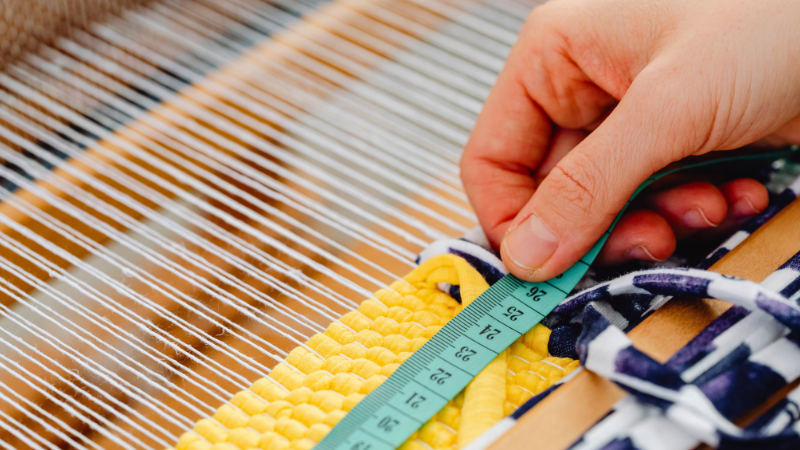
The usability of the fabric is established during the final inspection. Details on particular testing data and processes on fabric quality upkeep should be requested. The following are some of the important standards reliable fabric suppliers use during quality inspections:
- 4-Point system of fabric inspection: This is the standard of inspection of defects in woven and knitted fabrics in the industry. The mill imposes penalty points according to the size and severity of the defect, which gives an objective number of quality.
- Dimensional stability (Shrinkage): Garment fit is required. The shrinkage of the fabric should be checked after washing and heat treatment (usually 3x washing cycles) to achieve the target tolerance (usually less than 3%).
- Colorfastness tests: These tests are carried out to make sure that the dye does not bleed and fade. They are colorfastness to washing, rubbing (wet and dry crocking), perspiration and light exposure.
- Tensile strength and pilling resistance: Tensile strength is defined as the amount of effort required to tear the fabric (important in the creation of durable clothing), and pilling resistance is defined as the degree to which the surface of the fabric resists being pilled (lost its aesthetic quality) after friction.
Questions to ask the buyers: Demand internal AQL (Acceptable Quality Level) threshold of the mill and demand a final inspection report of a sample roll. This plays a significant role in setting quality assurance of what suppliers may see appealing.
Step 3: Verify Certifications and Compliance (Critical for Many Markets)
Certifications cannot be compromised when it comes to global fabric sourcing. Checking of certification makes it less risky, allows clearing of customs, and secures the image of your brand. This due diligence is what determines the correct fabric wholesale direct supplier.
Safety & Chemical Compliance
These certifications are aimed at making sure that your fabric is safe to the consumer as well as being free of toxic substances that are harmful to the consumer.
- OEKO-TEX Standard 100: Certifies that all the elements of the textile (threads, buttons, and dyes) are not harmful. This is compulsory to baby clothes, and strongly suggested to any clothing that comes in contact with the skin.
- ZDHC Compliance (Zero Discharge of Hazardous Chemicals): Indicates that the mill is in the process of trying to remove hazardous chemicals in its supply chain, especially in the dyeing and finishing processes.
Recycled & Sustainable Material Certifications
These certifications confirm the claim of raw materials, which offers transparency necessary in the development of sustainable fabrics.
- GRS (Global Recycled Standard): Monitors and determines the amount and composition of the recycled materials in the final product. Important when sourcing high quality fabrics like recycled polyester or recycled cotton.
- FSC / PEFC of Cellulosic Fibers: Ensures that wood pulp that gets used to make rayon, Modal, or Lyocell fibers is sourced in sustainably managed forests.
Factory & Management Systems
- ISO 9001: Ensures that the mill has strong, written procedures of quality assurance and error reduction.
- ISO 14001: Assures the mill of good systems to measure, control, and limit its environmental effects.
- ISO 45001: Certifies that the working environment in the manufacturing plant/ fabric store is safe to the workers.
Step 4: Evaluate Technical Capabilities & Production Range
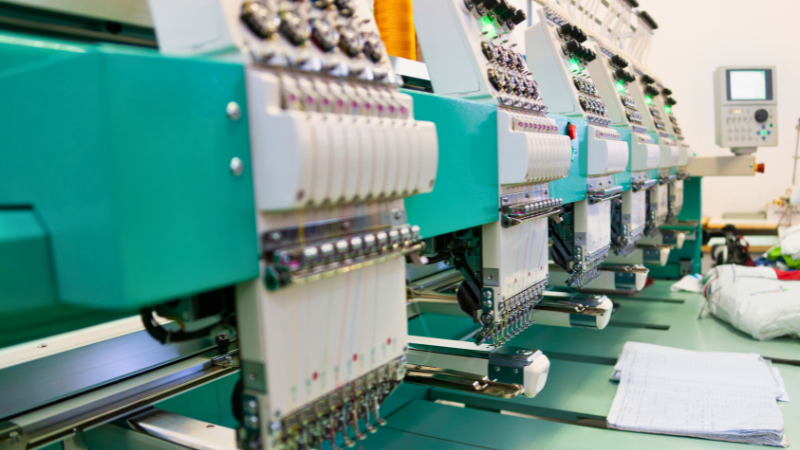
You have to make sure that the textile mill has the technical infrastructure which is required to process your custom fabric needs.
Evaluate the Production Range of Supplier:
| Capability | Questions to Ask | Why It Matters |
|---|---|---|
| Fabric Types & Construction | "Is it twill weave or knitted fleece that you specialize in? Have you worked with jacquard patterns and complicated construction of fabrics?" | Gives a straight answer as to whether the mill can manufacture the needed fabric structure. |
| Fiber Options | "How do you feel about nylon / rayon / wool blends? Do you also sell organic materials?" | Evaluates the expertise of the mill with other suppliers and chemical treatments. |
| Dyeing & Finishing | "Are you able to cope with polyester disparse dyeing? Do you come up with anti-pilling or water-repellent finishes?" | These in-house capabilities are the sole determinants of the final feel, durability, and functionality. |
Technical flexibility is an indicator of a powerful and well-established fabric mill that can design and deliver complex custom fabric solutions on a regular basis.
Step 5: Check Production Capacity and Lead Times
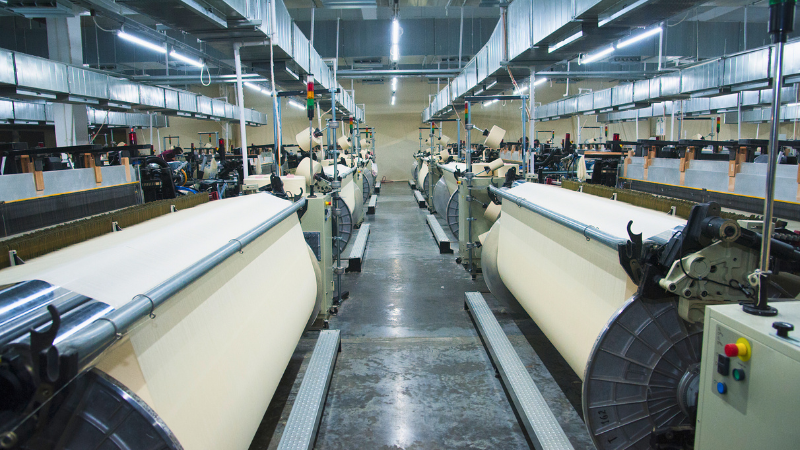
Lead times can only be good when the capacity of the mill matches with your order volume. A truthful textile producer gives realistic lead times. The following are some of the important capacity indicators.
- Monthly capacity: What is the highest amount of yards or weight that the mill can do per month of woven or knitted fabric? You should be able to make sure that your bulk order minimum quantity is 30% their total capacity to be able to be flexible.
- Capacity of dye house: The dyeing process is usually the largest bottleneck. Make sure that they can cope with your color runs.
- Sampling lead time vs. bulk lead time: The sampling lead time (7-14 days) of a good mill should be higher than the bulk lead time (45-90 days), indicating special R&D efforts. Customer satisfaction is achieved through on time delivery.
Step 6: Assess Communication, Transparency, and Professionalism
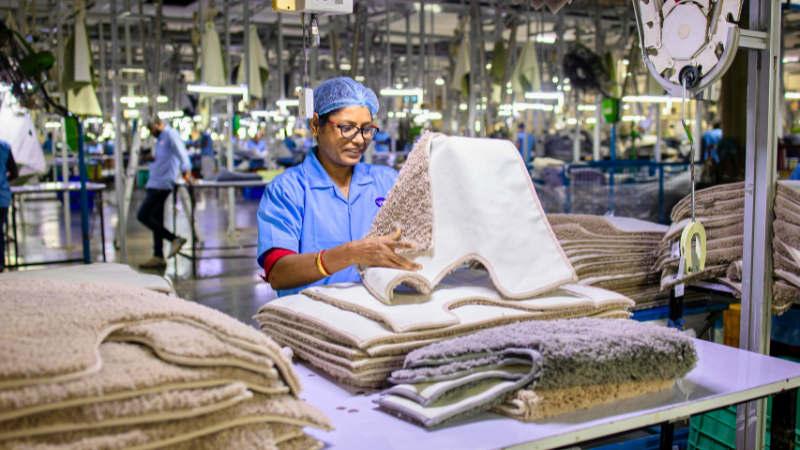
The interaction with cloth factories is frequently the largest indicator of a hassle-free production schedule. This is a non technical audit of their business ethics..
- Response speed: Fast, thorough, and professional responses mean that you are respected and that your time is well-managed as well as your internal processes. Customer service is very important.
- Specificity and clarity of quotes: Quotations are to be listed, and the cost of yarn, weaving, dyeing, and finishing put down separately. The right supplier can be found with the help of transparency.
- Attitude towards problems: Are they posing problems and solutions to them (We can not do this finish, but we can get a similar quality with this other finish) or simply blaming others?
- Cooperation to submit data: A confident supplier is willing to submit testing data, lab dips and sample reports. Ask to be provided with swatches and sample fabric so that you can be able to confirm claims.
Step 7: Review Pricing Structure and Cost Transparency
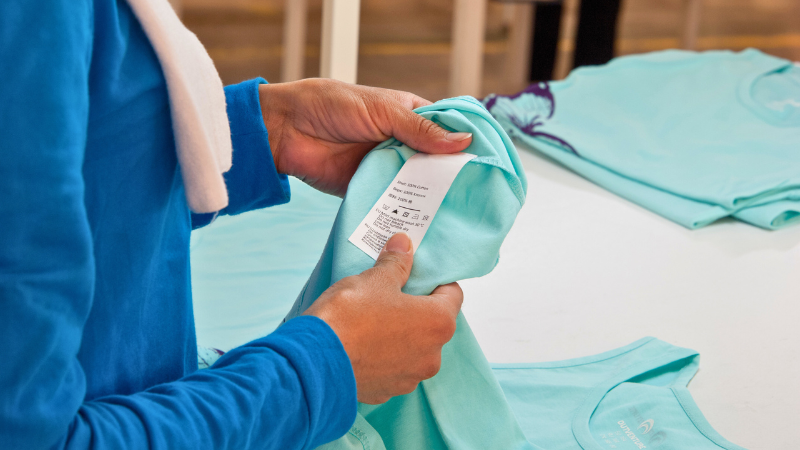
You have to consider pricing not only on the lowest price. Prices that are unrealistic are warning signs of poor quality. The following criteria can be used to check cost transparency.
- MOQ requirements and flexibility: This is to ensure that minimum order quantity (MOQ) is discussed early. An effective supplier will realize that startups require lower minimum order quantities and will provide the cost difference of small and bulk orders. Fabric suppliers need a specific amount to begin production.
- Concealed charges: Are the unit price inclusive of lab dips, sampling and testing or do they represent different charges? Are they inclusive of import duties? You must be aware of the entire financial investment and overall cost initially.
- Stability in pricing: Inquire about the stability of prices in the next 6-12 months because an abrupt price fluctuation, particularly when the cost of raw materials such as cotton or polyester is volatile, can ruin your profit margin. Suppliers can also provide high volume price breaks.
Step 8: Request Samples, Test Reports, and Case Studies
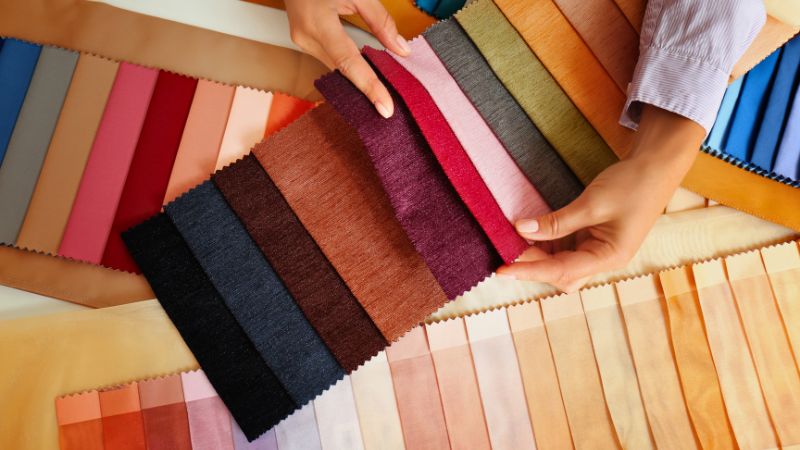
This is the last check you will do before making a large bulk purchase of fabric. You should ensure that you get the best wholesale fabrics. The following should be demanded by you as a buyer:
- Physical fabric swatches: Request swatches (small swatches used to feel and also to test the texture) and large sample yardage (used to test garment prototyping). You have to work with the material on your own. Watch the way the fabric is hanging and examine the completed edge (selvage).
- Lab-tested reports: Make sure that you demand most current test reports (ex: shrinkage, colorfastness, tensile strength) on your particular fabric. The certifications should be backed up with recent and specific testing information. Find the number of the fabric article on the report.
- References and case studies: Request non-competitor brands to provide references or examples of previous projects that they have completed to your satisfaction standard in your type of fabric (e.g., printed fabrics).
- Comparison of samples: Compare swatches of various suppliers in the same light source to eliminate problems of variation in color. Test the fabric grain and it has to be straight. This is to make sure that you obtain quality fabrics.
Step 9: Conduct a Factory Visit or Virtual Audit (If Possible)
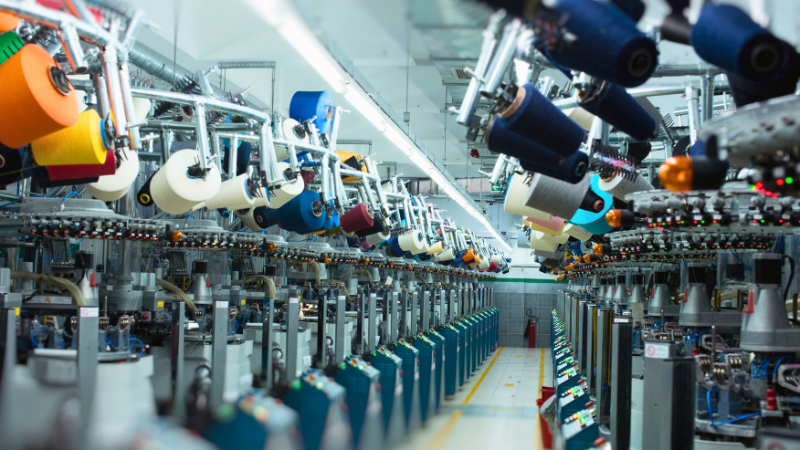
In case you are about to make a huge bulk order, a physical or online audit is invaluable in confirming the certifications and the abilities of the textile mill. To ensure that nothing is left out, you can use the following factory audit checklist:
- Cleanliness and order: A clean facility is an indicator of efficiency, high quality management and respect of the material.
- Machine modernity: The new dyeing machines and looms guarantee the quality is maintained and minimize downtimes.
- Safety and chemical control: Recheck the storing of the dyes and chemicals. A certified mill (with certifications such as OEKO-TEX STeP or Bluesign) should have a high level of chemical inventory control.
- Inspection processes: Find their special section of fabric inspection and see how they do it. Are they active users of the 4-point system?
Red Flags: Signs You Should Not Work With a Supplier
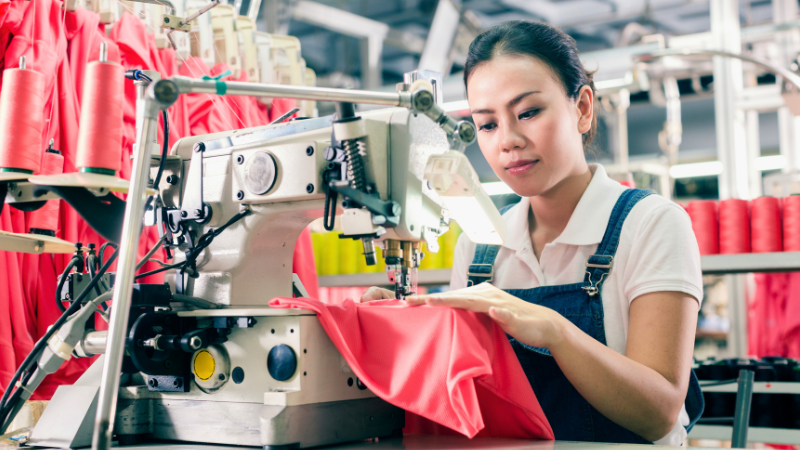
Buyers must be vigilant. These red flags are indicators of high likelihood of future quality or logistical failure. Do not do business with prospective suppliers who possess these characteristics.
- Unrealistically low pricing: Prices that are 20-30% below those of the market rate are usually either indicating that the mill is compromising the quality of raw materials, or not spending on costly environmental compliance.
- Denial of issuing certifications: Any supplier that is not able to deliver up-to-date GRS, OEKO-TEX or ISO certifications is probably not compliant and is a huge threat to your brand.
- Poor communication: Delays in response, or changing quotes are signs of ineffective internal control and will be directly transferred to long lead times.
- No Internal QC team: A supplier that is dependent on external testing does not have control over internal quality.
- Hidden cost: Each time the sampling, testing data or packing cost are changed, it kills trust and budget.
Conclusion: Choosing the Right Supplier Ensures Quality and Long-Term Growth
To learn how to evaluate a fabric supplier, it is necessary to go beyond price and focus on quality systems, technical infrastructure, and demonstrable compliance.. The supplier must be a strategic partner, who reduces risk and provides consistent quality. With this fabric sourcing checklist, you will transform your sourcing process into a formal audit and you will be in a position to ensure that the textile mill you select is able to deliver high quality and compliant fabrics in a reliable and efficient manner. Good supplier relations guarantee timely delivery and customer satisfaction.
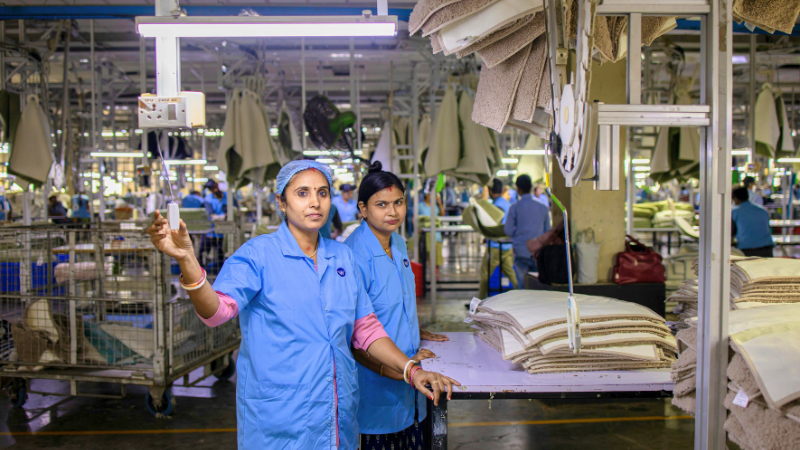
YM Textile is a fully certified fabric manufacturer that believes in transparency and quality. We also offer technical advice to assist you in maximizing cloth specifications and production schedule. In case you need assistance with the assessment of fabric specifications, sample ordering, or the verification of production capacity, our team will be able to provide expert advice and certificates that are verifiable. Contact YM Textile and negotiate your next fabric requirement.